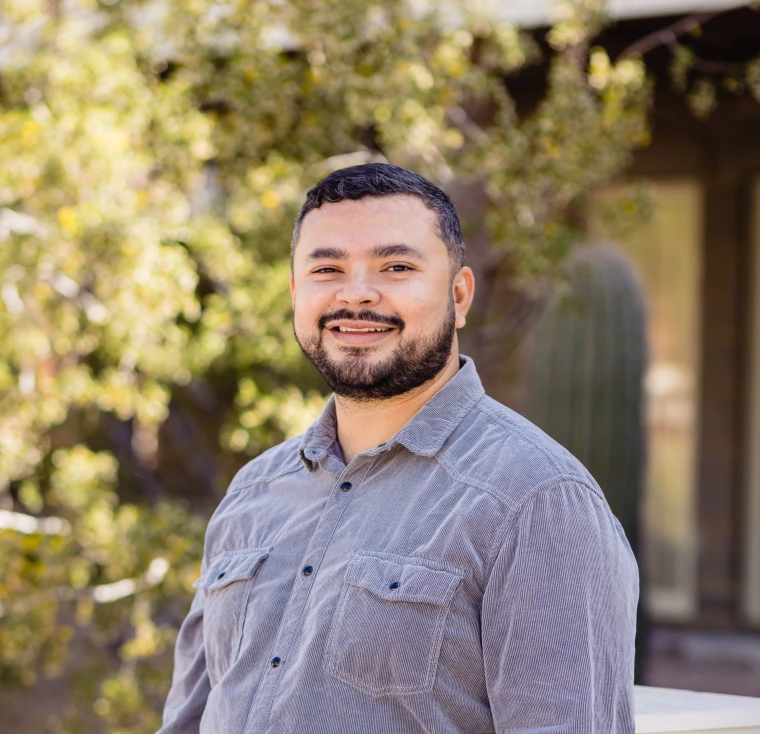
Wei Xu's Dissertation Proposal Presentation

Exploring Multilingual Genre Knowledge Development in a College First-Year Writing (FYW) Course

When
9 – 10 a.m., May 11, 2023

Proposal Title: Exploring Multilingual Genre Knowledge Development in a College First-Year Writing (FYW) Course

Dissertation Committee: Dr. Chris Tardy (Chair), Dr. Suzanne Panferov Reese, Dr. Julieta Fernandez, Dr. Guillaume Gentil (Special Member, Carleton University)

This is a private proposal presentation, and it will not be open for public viewing.

Sophie Park's Dissertation Defense

English Language Learning and Learner Identities of North Korean Refugees in South Korea

When
10 – 11 a.m., May 24, 2023

Dissertation Title: English Language Learning and Learner Identities of North Korean Refugees in South Korea

Dissertation Committee: Dr. Wenhao Diao (Co-Chair), Dr. Sunyoung Yang (Co-Chair), Dr. Hayriye Kayi-Aydar

Location: Please contact SLAT office (GIDP-SLAT@arizona.edu) for Zoom information 

Abstract: This qualitative ethnographic study aims to examine the interrelationship between English ideologies and learner identities of eight North Korean refugee (NKR) college students, and how they can further affect their English learning experiences by analyzing their narratives and classroom discourse. The study aims to expand the current knowledge of NKRs’ English learning by presenting and analyzing the stories of NKR English learners and users with diverse educational histories and ideologies and their fluid, multidimensional, and multidirectional identity construction and negotiation processes (Preece, 2016). Data were collected over the course of 7 months and included interviews, reflective journals, visual learner histories, and participant observations in English classrooms.

The findings revealed complex interrelationships between language ideologies, identity construction and negotiation processes, and second language (L2) investment of NKR students as English learners. The construction of English learner and user identities and the levels of L2 investment of the participants were subjected to various language ideologies in SK. The findings showed the linguistic racialization experienced by NKR students in SK, where they were often identified as uneducated and incompetent, reflecting the deficit ideology towards them. The study also revealed the intersectionality between Christianity and the NKR students’ identities and investment in English in different spaces. The study offers pedagogical implications from the local to the global level, including English education for NKRs and other minoritized groups, particularly immigrants and refugees. Moreover, the study provides implications for future research on the investigation of NKR students’ English learning and their identity construction and negotiation processes in their L2 communities. 

Image

Veronica Oguilve's Dissertation Defense

"Online Communities For Informal Language Learning: Exploring the Possibilities for Members of the Creators Co-Space"

When
1 – 2 p.m., Aug. 10, 2023

Dissertation Title: Online Communities For Informal Language Learning: Exploring the Possibilities for Members of the Creators Co-Space

Dissertation Committee: Dr. Jill Castek (Chair), Dr. Beatrice Dupuy, Dr. Emily Hellmich 

Abstract: There are numerous language websites, communities, and social apps online that focus explicitly on language learning. However, many times they are created in ways that mimic many of the aspects of language learning seen in formal environments. For example, specific controlled hierarchical organization of tasks and reliance on grammar explanations and subsequent exercises. In informal spaces where language learning is not explicit, learners can make their own decisions, make their own conclusions on what is valuable or meaningful for themselves, and learn vocabulary, expressions, and grammar as part of communication. Research on this type of learning in informal spaces is understudied. This study looked at language learning as the product of social interaction and participation in varied digital, creative activities that emerge within an online community. These activities are situated in a whole dynamic system that develops over time, which has subsystems that are constantly evolving and changing (Sockett & Toffoli, 2019). My study did not look at a snapshot of moments in an existing community or a single interaction in it, or the participation of learners in a formal environment who are required to participate in a community. Instead, this study looked at learners from different backgrounds and interests in a space where different elements interrelate in a system. It is a new online community that aimed to provide a better understanding of learning in the wild. Through the lenses of Critical Relationality (Olivares & Tucker-Raymond 2020) and the Echological Approach (Kramsch, C., & Steffensen, S. V. (2008), my study was centered on the creation of an online community that is a learner-centered creative space where incidental language learning may occur. This research had important implications that could be carried over into formal language learning environments.

Using exploratory methods, this research examined the development of an online community as it initially formed, came together, and grew. The community was composed of people with different purposes for interacting who were moved to participate in discussions and activities based on their interests, which were constantly evolving. The study examined the members' experiences, motivations, behaviors, and decisions made, and emerging opportunities for learning in this community. This included their dynamic participation and interaction with others with the goal of language learning. The study examined the learning outcomes from the perspectives of learners who had various participation profiles: The Power, the Motivated, the Curious, and the Attentive. More specifically, the study analyzed the characteristics of an online space -- specifically how people co-construct the space, self-organize, and communicate within the space, and consequently how the affordances within an online environment shape communication and are shaped by online participation. This research sheds light on ways that an informal community develops, evolves, and thrives in the wild, including what motivates active participation. Findings from this study would have implications for online interactions in formal learning contexts which may include opportunities for self-directed or collaborative work that encourages incidental language learning.

Keywords: online community, informal learning, incidental language learning, Ecological Approach, Critical Relationality, global, interaction, communication, multimodality, creativity.

To attend this defense, please email GIDP-SLAT@arizona.edu

Image
picture of Veronica Oguilve

Federico Fabbri's Dissertation Defense

"Why Study Romance Languages in the U.S.? (Investigating and Addressing the Enrollment and Retention Crisis in U.S.-Based Romance Language Programs)"

When
2 – 3 p.m., Aug. 7, 2023

Dissertation Title: "Why Study Romance Languages in the U.S.? (Investigating and Addressing the Enrollment and Retention Crisis in U.S.-Based Romance Language Programs)"

Dissertation Committee: Dr. Beatrice Dupuy (Chair), Dr. Suzanne Panferov Reese, Dr. Dwight Atkinson

Location: Via live Zoom presentation - https://arizona.zoom.us/j/366425113 

Abstract: In recent years, US-based foreign language (L2) programs have faced an enrollment and retention crisis (Looney & Lusin, 2019), also affecting L2 programs in the four most commonly taught Romance languages: French, Italian, Portuguese, and Spanish. Seeking to add to the current understanding of this crisis and provide possible solutions to reverse it, the present study investigated learners’ salient reasons for choosing these four Romance languages at the university level, as well as factors influencing their decision to continue or quit L2 study upon the fulfillment of the language requirement established within most US institutions. Through a combination of a multi-section questionnaire administered to US-based undergraduate students currently studying one Romance language and semi-structured interviews with selected participants, the present study aimed to identify recurring and salient motivational factors, both L2-specific and across different languages.

The study findings highlighted a complex interplay of elements influencing both L2 choice and participants’ decision to persist or quit L2 study upon fulfillment of the L2 requirement. It appeared clear that, overall, both participants who intended to continue and those who intended to quit L2 study often had a vague understanding of their own goals for L2 study and considered it a secondary academic priority. Indeed, they frequently subordinated their decision to persist in L2 study to the ability to fulfill their major and minor requirements in other disciplines. This conundrum seemed to be influenced both by participants’ past L2 learning experiences as well as their perceived limited applicability of university-level L2 study to their personal and professional lives. The study concluded by providing and discussing several recommendations and possible initiatives for curricular and program development aimed at addressing the crisis.

Please email GIDP-SLAT@arizona.edu with questions.

SLAT Minors & Certificates Info Session

Come learn about the 3 SLAT Minors and 2 SLAT Grad Certificates!

When
1 – 2 p.m., April 12, 2023

Did you know that SLAT has 3 doctoral minors and 2 certificate programs? Are you interested in finding out what the different minors and certificate programs are all about? Then come to our information session on Wednesday, April 12th, at 1:00 pm on Zoom! Some of the topics we’ll talk about are:

The Zoom link for the session is https://arizona.zoom.us/j/83346616898. Come with your questions, and we hope to see you there! For any questions about the information session, please email the SLAT Program Coordinator, Debbie Shon Buhler at dshon@arizona.edu.

Hanyu Jia receives NFMLTA-NCOLCTL Dissertation Research Award

March 23, 2023
Image
picture of Hanyu Jia

SLAT is proud to announce that SLAT PhD Candidate, Hanyu Jia, has received a dissertation research grant from the National Federation of Modern Language Teachers Association (NFMLTA) and National Council of Less Commonly Taught Languages (NCOLCTL)! This grant supports graduate student research in the fields of applied linguistics and language education with grants focused on the teaching and learning of less commonly taught languages (all languages except English, Spanish, French, and German). 

Please join us in congratulating Hanyu on her achievement!

Amable Custodio Ribeiro receives Bilinski Fellowship for 2023-2024

March 23, 2023
Image
photo of Amable Custodio Ribeiro

SLAT is proud to announce that one of our doctoral candidates, Amable Custodio Ribeiro, has been selected as a Russell J. and Dorothy S. Bilinski Fellow for the 2023-2024 academic year! Bilinski Fellows are selected from a list of distinguished graduate students who have demonstrated high academic achievement, good moral character, and exceptional ability and potential in their field of study. 

Please join us in congratulating Amable on her outstanding achievement!

Rachel Floyd's Dissertation Defense

"Needs Analysis of Recent Foreign Language Graduate Program Alumni"

When
8 – 9 a.m., July 13, 2023

Dissertation Title: Needs Analysis of Recent Foreign Language Graduate Program Alumni

Dissertation Committee Members: Dr. Jill Castek (Chair), Dr. Suzanne Panferov Reese, Dr. Beatrice Dupuy, Dr. Adriana Cimetta

Abstract: Professional learning plays a pivotal role in fostering continuous growth and improving the skills and knowledge of graduate students in FL programs to better prepare them for their careers post-graduation.  However, of those who start a doctoral degree program, roughly half complete their degree (Cassuto, 2013), and of those who do, the majority will not stay in academia (Cornell, 2020) due in part to the dearth of positions available (Grigoli, 2022).  Despite this, the professionalization of graduate students remains focused on preparing graduate students to be professors (Thompson et al., 2012; Byrnes, 2011).  Within foreign language (FL) graduate programs specifically, some arguments have been made that suggest graduate student professionalization should focus more on teaching skills development (Dupuy & Allen, 2012; Ryshina-Pankova, 2011; Thompson et al., 2012).  This kind of teacher training and professional development has been shown to be beneficial for graduate students as teaching is a skill that is meaningful both immediately for those graduate students who are also Teaching Associates and long-term as teaching as a skill can be transferred to other areas such as management.  The potential benefits of this kind of teacher training and professional development have been explored in the literature (Paesani, 2020; Zapata, 2020; Crane, 2015). However, it is largely unknown what FL graduate program alumni go on to do in their careers post-graduation, how effective the professionalization opportunities have been long-term, and what needs alumni from these programs still have. 

This study sought to examine this gap in the research by viewing the professionalization process as one of professional learning (PL) through a needs analysis examining alumni and faculty perspectives on PL for alumni and graduate students.  The collection and analysis of triangulated data sources encouraged the development of a more complete understanding of perspectives both from alumni through a survey and semi-structured interviews and from faculty through another survey and reflection prompts.   A thematic analysis process (Braun & Clarke, 1989) was employed using a constant comparative approach (Strauss & Corbin, 1990) followed by a cross-data analysis (Creswell, 2009).  Eight themes and several tensions between perspectives were identified.  Implications and recommendations for the PL of graduate students are discussed.

IRB Refresher Session

Come join us for a refresher session on the IRB process at the University of Arizona

When
11 a.m. – Noon, March 3, 2023

This event is for SLAT majors and minors at the University of Arizona

Do you want to know more about the Institutional Review Board (IRB) process at the University of Arizona? Do you need a refresher on what is needed for IRB applications and research/data collection with human subjects? Join us on Friday, March 3rd, from 11:00 am – 12:00 pm for Institutional Review Board (IRB) 101, given by Maria Acuna Baltierra, an IRB Associate in the Human Subjects Protection Program (HSPP) Office at the University of Arizona.

Come learn about how to work legally and ethically with human participants in language studies. What training do you need? What guidelines and restrictions are there? Are some people more protected than others? How do you submit your project for review and approval?

All these questions will be answered, and more!

Virtual Welcome for New SLAT Cohort

Join us as we virtually welcome our newest cohort of students

When
4 – 5 p.m., May 4, 2023

SLAT Faculty and Students, join us on Zoom as we welcome our newest cohort of students who will be starting SLAT in Fall 2023!