In Memoriam: Dr. LouAnn Gerken

July 1, 2025
Image

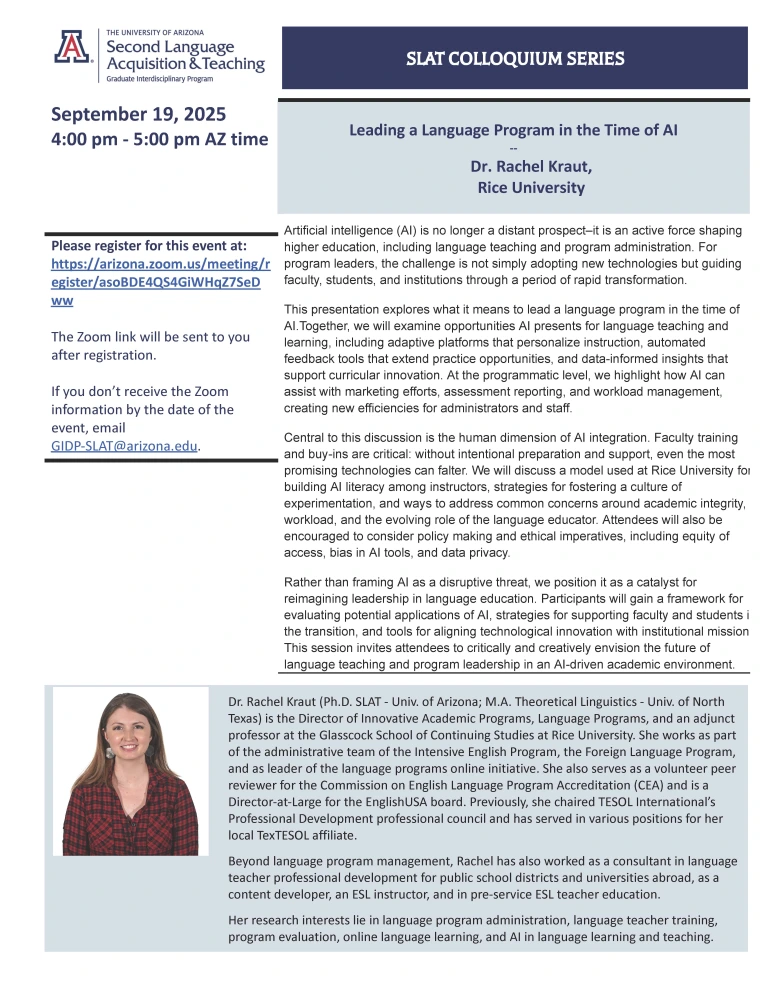
With deep sadness, we're sharing that Dr. LouAnn Gerken passed away on May 17, 2025 after battling metastatic breast cancer. She was born in Rochester, New York May 20, 1959 to Ann Lou Meyer Gerken and John Gerken, both deceased. She completed her B.A. at the University of Rochester and earned her Ph.D. in psychology at Columbia University. LouAnn was a professor of Psychology, Linguistics, Cognitive Science, and SLAT at the University of Arizona where she spent most of her academic career. She published more than 100 scientific papers and one book in her field of language development in young children. LouAnn is survived by her brother Michael Gerken and sister-in-law Sulma of Casselberry, Florida, her niece, two nephews and their children. No funeral or memorial was scheduled by her request.

Welcoming new SLAT Chair and thanking outgoing SLAT Chair

July 1, 2025
Image
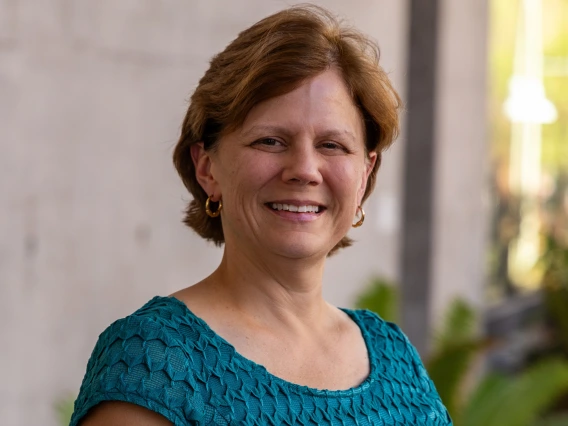
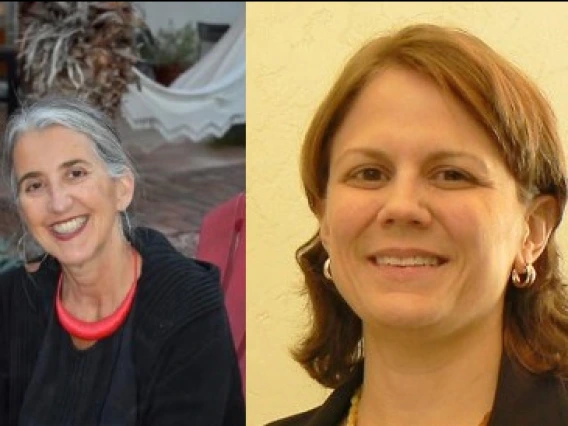
picture of Ana Carvalho and Suzanne Panferov Reese

Please join SLAT in welcoming Dr. Ana Carvalho as the new SLAT Chair! Dr. Carvalho steps into the role beginning July 1, 2025, and all of our faculty, students and staff are excited to begin working with her. Dr. Carvalho is a Professor in the Department of Spanish and Portuguese and a faculty member in SLAT, and is affiliated faculty with the Department of Linguistics and the Center for Latin American Studies. She has been involved with SLAT in many roles and ways since 2006, and we're looking forward to her direction in the program.

We also want to express our gratitude to Dr. Suzanne Panferov Reese, who stepped down from the SLAT Chair role after 5 years. The impact and positive changes that Dr. Panferov Reese made on SLAT are too numerous to list; instead, we want to thank her and pay tribute to everything she did throughout her time as Chair, and especially to all the students she advised and helped. We wish her well on her next roles at the University of Arizona!

SLAT Meet & Greet

Welcome back, SLAT community!

When
4 – 5:30 p.m., Sept. 5, 2025

Welcome back, SLAT community! Come catch up after the long summer! All new SLAT students, continuing SLAT students, SLAT faculty, SLAT alumni, and SLAT visiting scholars are welcome.

SLAT Meet Your Mentor Event

New students getting to meet their faculty mentors

When
3:30 – 4 p.m., Sept. 5, 2025

This short event will give the new SLAT students the chance to meet their new faculty mentors. Welcome to our new cohort!

University of Arizona New Grad Student Orientation

Open to all new graduate students at the UofA...

When
8:30 a.m. – 2 p.m., Aug. 21, 2025

The University of Arizona Graduate Center is hosting this year's New Graduate Student Orientation. This event is open to all new doctoral and masters students at the UofA and will be held on Thursday, August 21st, in the Student Union Memorial Center (SUMC) - 3rd floor Grand Ballroom. International students should check in by 8:30 am and domestic students should check in by 9:30 am; the event will last until 2:00 pm. 

Students should register as soon as possible through Grad Start, and must have their NetID before they can access the registration form. 

For questions about the orientation, please email info@grad.arizona.edu

Image
orientation image

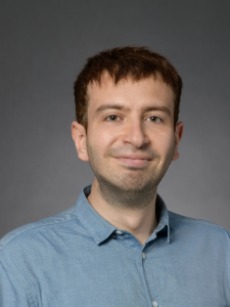
Wei Xu

Assistant Professor of Rhetoric and Writing Studies; Specialization: Second Language Writing
Northern Illinois University
Ph.D.
Second Language Acquisition and Teaching
2025
Image
Wei Xu picture

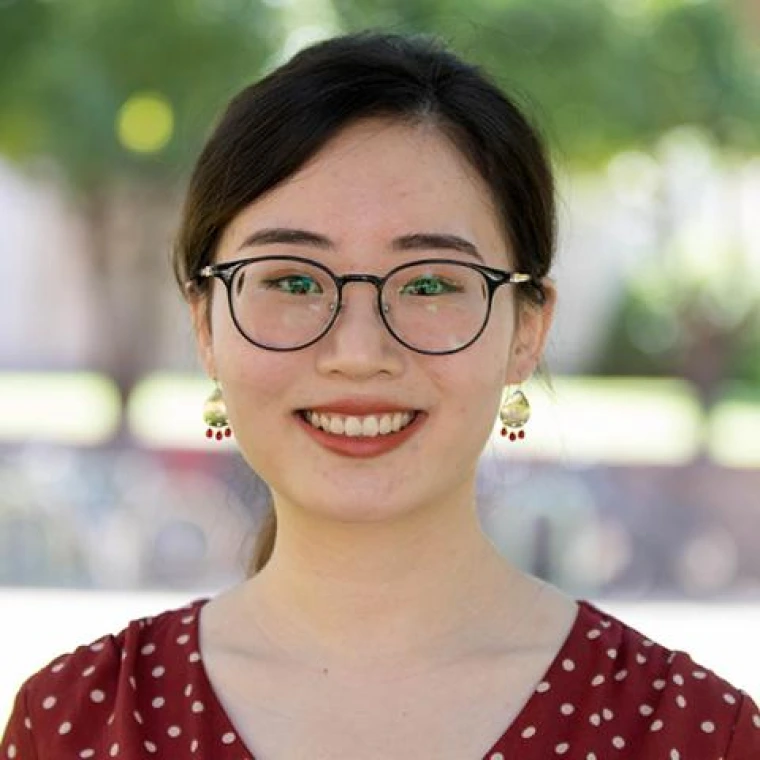
Hui Wang's Dissertation Defense

Corpus-based Pedagogy in Undergraduate L2 Writing Courses: Effectiveness, Engagement and Instructors' Understanding

When
9 – 10 a.m., Aug. 4, 2025

Dissertation title: Corpus-based Pedagogy in Undergraduate L2 Writing Courses: Effectiveness, Engagement and Instructors' Understanding

Dissertation Committee: Dr. Shelley Staples (Chair), Dr. Jonathon Reinhardt, Dr. Christine Tardy

Dissertation Abstract: Corpus-based pedagogy, or data-driven learning (DDL), aims to use large collections of real-world language examples to support students in analyzing language patterns and variations in authentic contexts, guiding them to inductively discover target language features, and developing their language awareness and knowledge (Friginal, 2018; O’Keeffe & McCarthy, 2010; Poole, 2022; Reppen, 2010). Recent studies found that corpus-based pedagogy has been increasingly adopted in writing education across different areas (Boulton & Cobb, 2017; Boulton & Vyatkina, 2021; Chen & Flowerdew, 2018). While professional and published-text corpora have been widely applied in corpus-based writing courses, the value of learner corpora is often overlooked in current writing instruction, despite the fact that they can provide more accessible and non-threatening texts that better align with genres students are expected to write (Seidlhofer, 2002). 

The three studies of the dissertation are centered around implementing corpus-based activities created using a learner corpus Corpus & Repository of Writing (Crow) (Staples & Dilger, 2018-), to enhance L2 students’ writing skills in first-year writing courses. Employing both quantitative and qualitative methods, students’ drafts, surveys from both students and instructors, semi-structured interviews, and teacher reflections were collected and analyzed. Article one explores the effectiveness of integrating texts and data derived from the learner corpus Crow in teaching evaluative language (evaluative adjectives and modal verbs) in an academic writing project. To make corpus-based pedagogy more engaging for students, Article two extends to integrating game elements, introducing a series of gamified corpus-based materials and investigating the students’ and instructors’ perceptions as well as addressing the benefits of gamifying corpus-based materials in their L2 writing classes. Finally, Article three examines non-specialist instructors’ understanding and perceptions of corpus-based pedagogy before, during, and after implementing ready-to-use corpus-based materials in their own teaching contexts. 

Together, the three articles highlight the effectiveness of using learner corpus-based materials in teaching evaluative language, introducing practical strategies for increasing student engagement in corpus-based writing courses, and exploring non-specialist instructors’ evolving understanding of corpus-based pedagogy throughout their first implementation. The dissertation contributes to addressing the pedagogical applications of learner corpora and offers insights for designing effective, engaging, and accessible corpus-based activities for L2 writing contexts.

Image
picture of Hui Wang