Dissertation Title: Oral Development of L3 Portuguese by English-Spanish Bilinguals
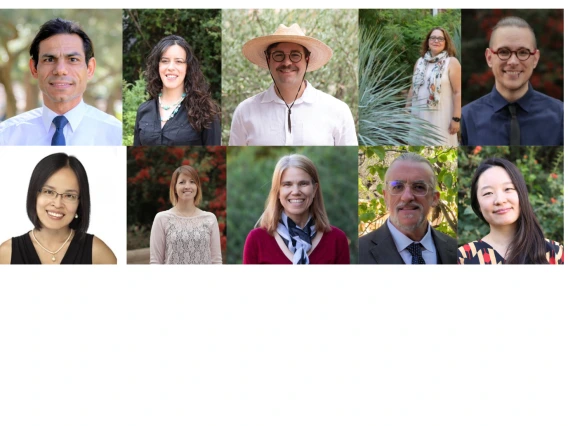
Dissertation Committee: Dr. Shelley Staples (Chair), Dr. Ana Carvalho, Dr. Adriana Picoral, Dr. Miquel Simonet, Dr. Andrew Wedel
Zoom link: https://arizona.zoom.us/my/marianabertho
Abstract: Portuguese is among the 15 languages other than English with higher enrollment rates in higher education institutions across the US (MLA, 2023). The majority of students taking Portuguese courses also speak Spanish, thus, they are English-Spanish bilinguals learning Portuguese as a third language. However, their experience with Spanish is not homogenous: some have learned Spanish as an L1 or heritage language, in a naturalistic environment, and others have learned Spanish as an L2, later in life, in an instructional setting. In this context, this study aims at investigating the acquisition of L3 Portuguese, more specifically the phonological aspect, by English-Spanish bilinguals, comparing L1 Spanish and L2 Spanish speakers and three course levels (first, second, and third consecutive semesters of a Portuguese language program).
Theoretical models in L3 acquisition have mainly investigated how learners’ linguistic repertoire affects their process of acquisition of the third (or more) languages, i.e. which language(s) are more likely to be the source of transfer and if transfer will happen exclusively from one language or on a property-by-property basis (Schwartz and Sprouse, 2021). The studies in L3 Portuguese have mainly focused on morphosyntax features (e.g. Giancasparo et al., 2015; Cabrelli Amaro et al., 2015) and show evidence of transfer from the most typologically similar language in learners’ linguistic repertoire, favoring the Typological Similar Model (Rothman, 2013; Rothman, 2014). Therefore, in the context of English-Spanish bilinguals learning L3 Portuguese it is expected that Spanish will be the main source of cross-linguistic transfer. However, this debate is not settled yet specially when it concerns L3 phonological acquisition (Cabrelli and Pichan, 2019). The student population of this dissertation – English-Spanish speakers, with different experiences in Spanish acquisition, learning L3 Portuguese – is an ideal context to test if the experience learning Spanish will affect the source of linguistic transfer to Portuguese.
The studies in this field are hosted under formal linguistics and have followed an experimental approach, using grammaticality judgement tasks, perception tasks, discrimination tasks, and elicited production tasks. Meanwhile, spoken corpora studies, based on compilation of naturally occurring language, have the potential to contribute to the field as it reveals features of learners’ spontaneous or semi-spontaneous performance. For that reason, this study proposes the acoustic analysis of the oral production of English-Spanish speakers’ learners of L3 Portuguese compiled in the Multilingual Academic Corpus of Assignments – Writing and Speech (Staples et al. 2019-). The corpus subset analyzed in this dissertation includes the production of oral course assignments by 38 students enrolled in three course levels (first, second, and third semester), 21 who have acquired Spanish as L1/heritage languages and 17 who have learned Spanish as an L2 later in life in instructional settings. The goal is to determine if there is any significant difference in learners’ production comparing L1 Spanish and L2 Spanish speakers and across course levels.
To inform the acoustic analysis, I selected segments of potential pedagogical interest based on a functional load analysis of L1 Portuguese data from a corpus representative of spontaneous spoken language, the C-ORAL-Brasil-I (Raso and Mello, 2012). Based on the analysis of frequency of occurrence of English segments in Gilner and Morales (2010), the results indicated that mid front/back open/closed vowels (/e-ɛ/ and /o-ɔ/) have the potential to cause perception and production issues in Spanish speakers’ Portuguese production because open vowels are much less frequent than their closed counterparts. This difference in frequency may cause the less frequent item (the open vowels /ɛ, ɔ/) to be more obscure for learners to notice and distinct from their closed pairs (e and o), especially because such phonemic contrasts do not exist in Spanish.
The Pillai score (Hall-Lew, 2010), a value from 0 to 1 that indicates how much two datapoint clusters overlap, was calculated for each participants’ production of /e-ɛ/ and /o-ɔ/. Results show no significant distinction between mid front vowels and mid back vowels in learners’ production. The Mann-Whitney statistical test was used to compare the Pillai scores between L1 and L2 Spanish groups and no significant difference between groups was observed. The Kruskal-Wallis statistical test was used to determine any significant difference across course levels. The only comparison that showed significant difference was in the production of /o-ɔ/ between second and third semester. Interestingly, second semester had a higher Pillai score mean (.37) than third semester (.14). Since the closer to 1 the more distinct the two vowels are, this finding suggests that learning experience does not necessarily affect the production of this phonemic contrast. Individual differences may have affected this result. The results also indicate that the experience learning Spanish was not a determinant factor in learners’ production. Therefore, it suggests that both groups resorted to their phonological representation of Spanish to interpret the Portuguese phonemic contrasts /e-ɛ/ and /o-ɔ/, since these vowels were not differentiated enough in their production. This finding favors the Typological Primacy Model (Rothman, 2013) showing that the status of Spanish in learners’ repertoire (L1 vs. L2) did not affect their production, but rather the perceived typological similarity between Portuguese and Spanish.